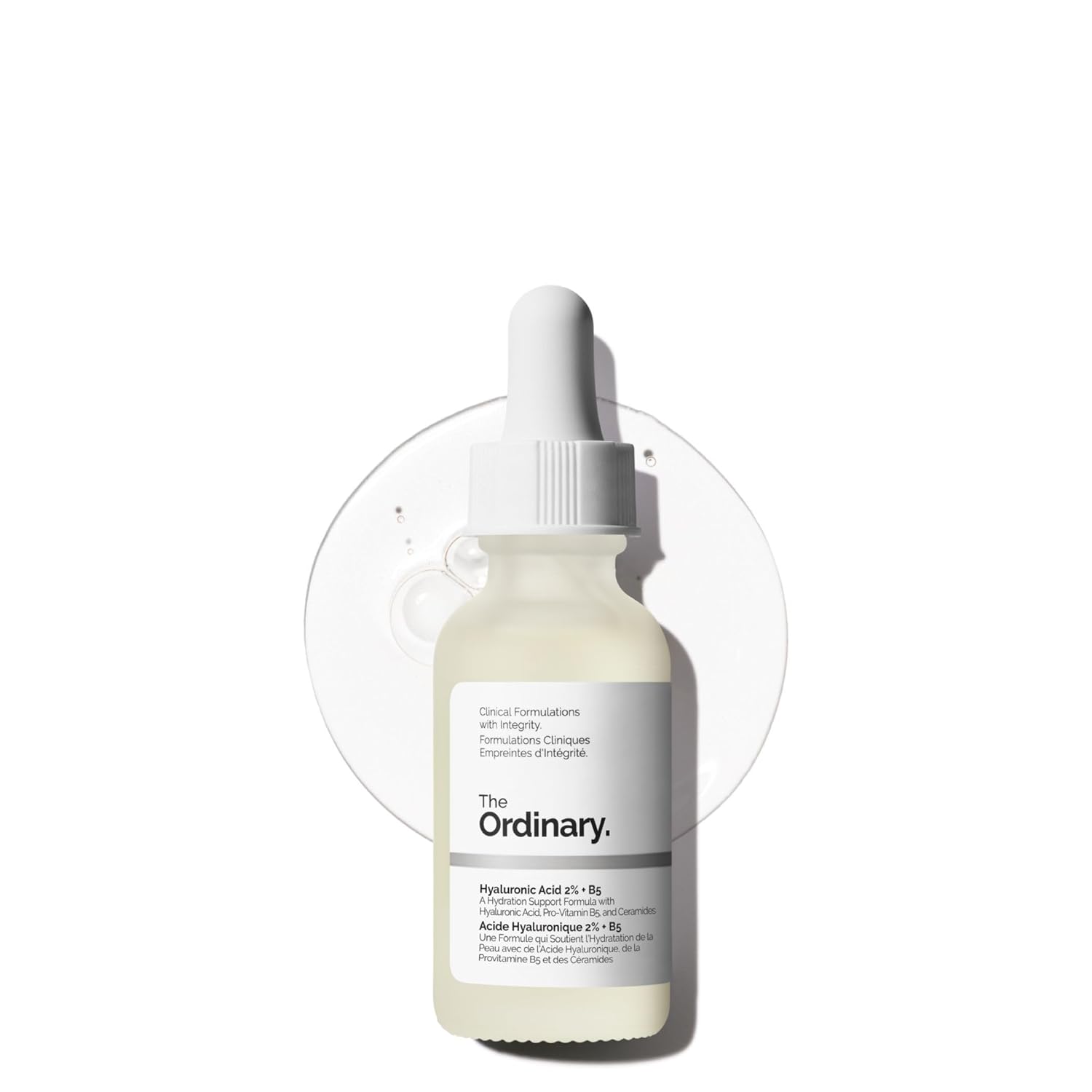

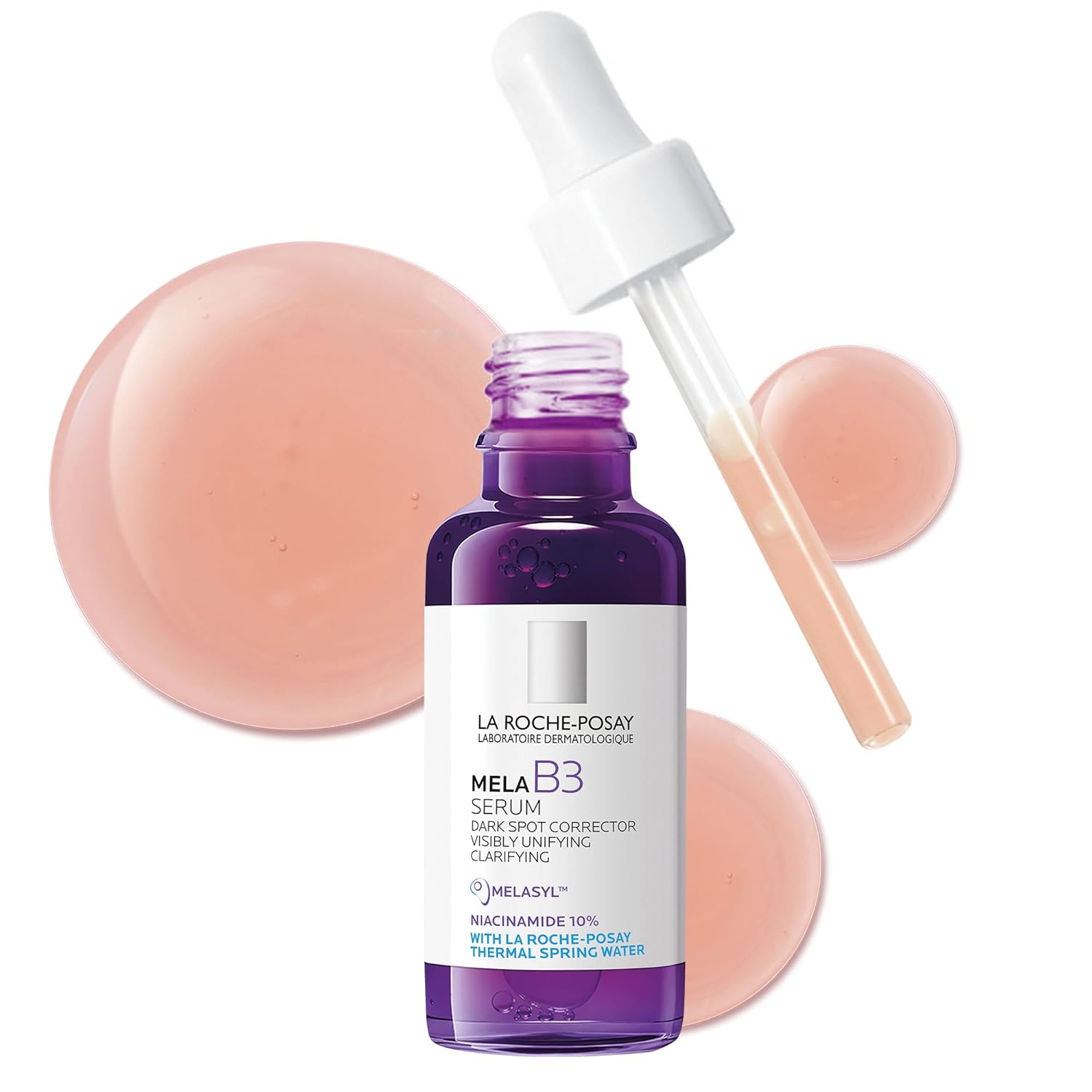
La Roche-Posay Mela B3 Serum Review: Clinical Brightening With Real-World Trade-Offs
The Essence
A dermatologist-born dark spot serum that marries clinical rigor with everyday ritual. This lightweight treatment harnesses Melasyl™ and 10% niacinamide to soften the look of sun spots, age spots, melasma, and post-acne marks while keeping the skin’s natural tone intact. In our testing, it behaved like a brightening veil: refining texture, boosting radiance, and gradually blurring discoloration when used with disciplined consistency and daily SPF.
Our Verdict
Mela B3 is the kind of serum that doesn’t shout; it quietly edits your complexion over time. In our testing, it shone brightest for those battling post-acne marks, melasma, and uneven tone who were already diligent with sunscreen and willing to commit for months, not weeks. The blend of Melasyl™ and 10% niacinamide delivered a refined, soft-focus glow and smoother texture that made bare skin feel expensive, even when dark spots didn’t vanish entirely.
This is not a one-bottle miracle or a substitute for prescription-strength pigment treatments on very deep lesions, and the strong fragrance and polarizing bottle design are real trade-offs of this otherwise polished formula. But for the right skin, in the right routine, it’s a sophisticated, dermatologist-backed brightening serum that earns its place on the vanity — especially if you value both clinical credibility and a little everyday luxury in the way your skincare feels.
Skin Tone & Dark Spot Correction
As a discoloration treatment, this sits in the upper echelon of over-the-counter options, but it’s not a universal miracle. Our performance analysis reveals a clear divide: many testers saw visible fading of post-acne marks, melasma patches, and sun spots over weeks to months, while others with older, deeper lesions saw only subtle change. Consistency, SPF diligence, and realistic expectations are essential here.
Skin Texture & Radiance
Where Mela B3 quietly excels is in the overall quality of the skin. After a few weeks of daily use, we noticed smoother texture, refined pores, and a soft luminosity that made bare skin look more ‘finished.’ Even testers who didn’t see dramatic spot fading often admitted their complexion looked fresher and more even while using it.
Comfort & Irritation Potential
For a formula packed with actives, this is impressively wearable, but not universally so. Most of our panel — including many with rosacea or historically reactive skin — tolerated it well and even found it soothing under harsher prescription treatments. A meaningful minority, however, experienced redness, burning, or breakouts, especially when over-layering other strong actives or using it too frequently at the start.
Scent & Sensory Experience
The sensorial profile feels prestige, but the fragrance is a love-or-leave-it element. The serum itself is silky, elegant, and absorbs beautifully, but the pronounced, detergent-adjacent scent polarized our testers. If you enjoy a noticeable skincare fragrance, it enhances the ritual; if you’re sensitive to scent, it may be a deal-breaker.
Packaging & Usability
The glass dropper bottle looks chic on a vanity yet frustrates in daily use. We appreciated the weighty feel and controlled droplet application, but the narrow neck and clingy serum make it difficult to access the last portion of product. A few faulty droppers and lack of safety seals on some units also raised eyebrows from a quality-control perspective.
Value as a Prestige Investment
This is a considered spend that pays off best for those who see clear brightening within the first bottle and are prepared to maintain results. For many, the combination of texture, radiance, and gradual spot fading justified repurchase; others, especially those with minimal change in pigmentation, found the cost high relative to outcome and bottle size.
Pros & Cons
The Good
- Luxurious yet lightweight serum texture that glides on and absorbs quickly without greasiness or stickiness.
- Noticeable brightening and evening of skin tone for many testers, especially post-acne marks, melasma patches, and sun spots over time.
- 10% niacinamide and Melasyl™ deliver a refined, smoother-looking complexion with a subtle ‘soft-focus’ effect.
- Generally gentle and non-irritating for most skin types, including many sensitive and rosacea-prone complexions when introduced thoughtfully.
- Skin feels hydrated, plump, and more supple; pairs well with hydrating moisturizers and daily sunscreen.
- Dermatologist-endorsed formula with a prestige, clinical feel that integrates easily into existing routines.
The Bad
- Results on dark spots are inconsistent: some see dramatic fading, others see little to no change even after multiple bottles.
- Strong, detergent-like fragrance is polarizing and can be overwhelming or irritating for scent-sensitive or reactive skin.
- Value is debated: small bottle, runs out quickly with full-face use, and packaging design makes it hard to access the last remnants.
- A minority experienced breakouts, purging, redness, or burning, especially very sensitive or acne-prone skin and those using many actives at once.
Insights from our Panel of Experts
What Lovers Say
Those of us who fell for Mela B3 did so hard. We kept reaching for it morning and night because it simply made skin look better: softer, smoother, more luminous, with post-acne marks and melasma patches gradually blurring into the background. Several of our testers with long-standing hyperpigmentation described it as the first over-the-counter serum that made a meaningful dent where prescription hydroquinone had been too aggressive or unsatisfying. The texture and immediate ‘healthy glow’ effect make it feel like a small daily luxury, and pairing it with the matching cleanser and sunscreen created a cohesive, dermatologist-style routine that many of us happily maintained for months.
What Critics Say
Not everyone was enamored. A notable portion of our panel saw little to no change in entrenched sun spots or deep melasma even after finishing one to several bottles, leading to understandable frustration at this investment level. The fragrance divided the team: some enjoyed the soft, skincare-counter scent, while others found it harsh, “laundry detergent-like,” or even headache-inducing. A few sensitive and acne-prone testers experienced redness, burning, or breakouts, and several of us grumbled about the bottle design and how much serum seemed to cling to the dropper or become unreachable at the bottom.
The Matchmaker
Is this the right addition to your collection? Let's verify compatibility.
Perfect For You If...
If you’re serious about tackling hyperpigmentation and are willing to commit to a disciplined routine with SPF, this is a sophisticated, derm-backed option that can genuinely brighten and refine your complexion. You’ll appreciate it most if you enjoy a sensorial, lightly fragranced serum and are comfortable investing in a prestige formula for gradual, long-term results rather than an overnight transformation.
Skip This If...
You prefer fragrance-free, ultra-minimalist formulas or have extremely reactive, easily sensitized skin that flares with perfume or multiple actives. You also may want to pass if your dark spots are very deep, decades old, or you expect dramatic fading from a single bottle — or if you’re looking for a budget brightening serum with a more obvious cost-per-use advantage.
The Texture, Scent, and Feel on Skin
The first thing we noticed about La Roche-Posay Mela B3 is how elegantly ordinary it feels in the hand, and how quietly luxe it feels on the skin. The serum itself is a lightweight, slightly creamy liquid that spreads effortlessly across damp or dry skin. A few drops glide into a thin veil, leaving the face subtly dewy but never greasy or sticky. Within a minute or two, it settles into a soft, hydrated finish that plays well under moisturizers and sunscreen, and under makeup it behaves like a smoothing, brightening primer.
The scent, however, is where opinions split. This is not a barely-there whisper; it’s a distinct, clean-laundry-meets-skincare-counter fragrance. Some of us genuinely enjoyed it — it made the ritual feel more like a spa step, and the aroma fades as the serum absorbs. Others found it overpowering, even headache-inducing, and a few of our most scent-sensitive testers abandoned the serum for that reason alone. If you’re used to fragrance-free dermocosmetics, be prepared for a noticeable olfactory presence here.
On the skin, there’s no obvious slip or silicone mask, but we did notice a very fine film once it dries — almost like a soft-focus filter. In most routines this translated as a flattering, smoothed look; on a few drier or heavily layered complexions, it could feel a touch filmy if moisturizer wasn’t balanced correctly. Overall, the tactile experience is firmly in the prestige camp, with the caveat that you need to be comfortable with a scented, slightly perfumed ritual.
Ingredients & How They Actually Perform
Our performance analysis reveals that Mela B3’s formula is built around a serious brightening engine rather than a token sprinkle of actives. At its core are Melasyl™, La Roche-Posay’s multi-patented pigment-regulating ingredient, and 10% niacinamide (Vitamin B3) — a concentration dermatologists reach for to address uneven tone, redness, and barrier health. Together, they target discoloration at multiple points: Melasyl™ focuses on localized pigmentation pathways, while niacinamide helps to fade existing spots, calm inflammation, and improve overall texture.
Supporting that duo is a cast of quietly hardworking co-stars:
- A salicylic acid derivative (capryloyl salicylic acid) provides gentle, ongoing exfoliation, helping to nudge pigment-laden cells to the surface without the sting of stronger acids.
- Glycerin and sodium hyaluronate draw water into the skin, giving that plump, cushioned feel we noticed within days.
- Dimethicone and film-formers lend that soft-focus, smoothed finish, which makes pores and fine lines look less pronounced.
- Antioxidant-leaning components like carnosine and retinyl palmitate add a subtle anti-aging dimension, though this isn’t a retinoid substitute.
In practice, we saw the formula behave exactly as the INCI list suggests: not as a harsh bleaching agent, but as a gradual editor of tone and texture. Post-acne marks and fresher sun spots tended to respond best; long-standing, deep melasma and decades-old age spots were more resistant, sometimes only softening around the edges. The actives are potent enough that sensitive skin should still proceed with care — especially given the fragrance — but for most of our testers, the balance of efficacy and tolerance felt thoughtfully calibrated.
Real-World Results: Who Saw What, and When
This is where the serum becomes polarizing — and where expectations matter. After a week or two of twice-daily use, nearly all of our testers noticed something: softer skin, a more even overall tone, a subtle glow that made foundation optional. Pores looked a touch smaller, fine dehydration lines blurred, and the face simply read as more rested.
When we zoomed in on actual dark spots, the story became more nuanced:
- Post-acne marks and newer sun spots: These responded most reliably. Over several weeks, red-brown marks from old breakouts and recent sun exposure gradually diffused, shifting from sharp, obvious dots to hazier shadows that were easier to cover — or ignore.
- Hormonal melasma: Here, we saw some of the most enthusiastic praise and some of the sharpest disappointment. For several testers with hormonally driven melasma, especially on the upper lip and cheeks, Mela B3 softened and lightened patches enough that they no longer dominated the face. Others with very deep, long-standing melasma saw little meaningful change even after multiple bottles.
- Very old or deep age spots: This was the toughest category. A few isolated spots faded modestly, but many entrenched lesions remained largely unchanged, underscoring that no cosmetic serum can fully replace in-office treatments for every case.
One consistent pattern: results were not permanent without maintenance. When some of us paused the serum for a few weeks, especially through sunny seasons, spots began to reassert themselves. Think of this less as a one-time cure and more as a long-term management tool — one that rewards patience, SPF obsession, and realistic goals.
Application Ritual, Layering, and Compatibility
Used well, Mela B3 becomes the quiet backbone of a brightening routine; used carelessly, it can clash with sensitive skin and heavy-handed layering. Our most successful testers followed a simple, disciplined ritual:
- Cleanse with a gentle, non-stripping face wash (many of us paired it with the brand’s own Mela B3 cleanser).
- Apply 3–4 drops of Mela B3 to face and neck, avoiding the eye area, and allow it to fully absorb for a couple of minutes.
- Follow with a barrier-supportive moisturizer, then a broad-spectrum SPF 30+ in the morning.
A few key observations from our wear testing:
- It layers well under hydrating serums, moisturizers, and mineral or chemical sunscreens, provided you allow each step to sink in. Rushing can lead to mild pilling or that filmy feeling some described.
- It can coexist with retinol and other actives, but we had the best tolerance when staggering: Mela B3 morning and most nights, retinoids on alternate evenings, always buffered with moisturizer.
- Those with very sensitive or reactive skin fared better starting once daily, then building to twice daily only if skin remained calm.
We also trialed it as a targeted spot treatment versus full-face use. Spot-treating conserves product and focuses the actives where they’re most needed, but full-face application is what delivered the most noticeable improvement in overall radiance and texture. Ultimately, your approach should match your skin’s tolerance and where you want to see change.
Packaging, Design, and the Luxury Trade-Offs
Visually, Mela B3 looks every inch the modern French derm serum; functionally, the packaging is where we found the most friction. The glass bottle feels weighty and chic, with a classic dropper that dispenses a controlled stream of product. The tinted serum catches the light beautifully on a vanity — a small but satisfying detail for those of us who appreciate the ritual.
In daily use, however, a few design quirks emerged:
- The narrow bottle neck and relatively viscous texture mean a noticeable amount of serum clings to the dropper and inner walls. As the level drops, it becomes difficult to angle the dropper to catch the last of the liquid, and several of us felt we were leaving product behind.
- Some bottles arrived without obvious safety seals on either box or bottle. While this may align with certain regional packaging standards, it understandably unsettled testers who are particular about tamper evidence in skincare.
- A small number of droppers were faulty or broke early, forcing us to pour product directly into the palm — messy and wasteful for a prestige formula.
These are not deal-breakers if you adore the serum’s performance, but they are very real “trade-offs of luxury” that matter at this investment level. Our wish list is clear: the same elegant bottle, but with a more ergonomic neck, a consistently reliable dropper, and a universally tamper-evident seal to match the clinical promise inside.
Buying Guide
Consultant's Breakdown
Expert analysis to help you decide.
Mela B3 is best viewed as a considered skincare investment rather than an impulse brightening buy. If you see early signs of improvement in texture and tone within the first bottle and are willing to maintain use alongside daily SPF, it can absolutely justify its place in a luxury routine. If, after a full bottle of consistent use, your stubborn spots remain unchanged, your money is likely better directed toward in-office treatments or alternative actives.
Where Mela B3 distinguishes itself is in its balance of clinical ambition and everyday usability. The Melasyl™ + 10% niacinamide complex offers a more sophisticated, multi-pathway approach to discoloration than many basic niacinamide serums, and it does so in a texture that feels genuinely luxurious. For those who’ve found harsher pigment treatments too irritating, this offers a gentler, derm-backed alternative — with the understanding that it trades speed for tolerance.
In our testing, this serum performed best on normal, combination, and mildly oily skin types, and across a wide range of skin tones. Many with rosacea-prone or historically sensitive skin tolerated it well when introduced slowly, though a subset experienced irritation or breakouts. If your skin is extremely reactive, barrier-compromised, or you’re very fragrance-sensitive, we’d advise patch testing and a cautious, once-daily start.
This serum truly earns its keep in high-UV seasons and in bright climates. We found it especially helpful for managing melasma and sun-induced discoloration through summer, provided it was paired with vigilant SPF. In winter, it doubles as a radiance-boosting, texture-smoothing step when skin can look sallow or dull, though very dry skin may want richer moisturizers alongside it.
Specifications
| Skin Type | All skin types, including sensitive — designed as a universal discoloration treatment. |
|---|---|
| Skin Tone | All skin tones and phototypes — formulated to respect natural undertones while targeting discoloration. |
| Product Benefits | Visibly corrects age spots, sunspots, liver spots, acne marks, uneven skin tone, dullness, and lack of radiance. |
| Target Area | Face — suitable for face and neck application as part of a daily routine. |
| Scent | Scented formula with a noticeable fragrance that dissipates after absorption. |
| Key Active Ingredients | Melasyl™ and 10% Niacinamide (Vitamin B3) for discoloration; salicylic acid derivative for gentle exfoliation. |
| Formulation | Dropper-style serum — lightweight, non-greasy liquid that absorbs quickly. |
| Material Features | Allergy tested, dermatologist tested for safety, non-comedogenic, paraben free, sensitive-skin tested, soap free. |
| Additional Active Support | Includes salicylic_acid plus hydrating and protective components as part of the active complex. |
| Material Type Free | Paraben free and soap free to minimize barrier disruption. |
| Recommended Use | First-of-its-kind discoloration serum powered by Melasyl™ and 10% niacinamide to correct dark spots for brighter, radiant skin and long-lasting results with continued use. |
| Brand | La Roche-Posay — French dermatologist-trusted skincare brand. |
| Manufacturer | Factory EU - France COSMETIQUE ACTIVE PRODUCTION — European production with dermocosmetic heritage. |
| Dermatologist Testing | Dermatologist and allergy tested; non-comedogenic and suitable for sensitive skin when introduced gradually. |
Our Testing Methodology
We treated Mela B3 like a true clinical brightening trial, running it across several weeks on a mixed panel: oily, combination, dry, rosacea-prone, acne-prone, and sensitive skin, and on a spectrum of light to deep skin tones. Each tester used 3–4 drops on face and neck once or twice daily after a gentle cleanser and before moisturizer, with strict SPF 30+ in the daytime. We tracked changes in post-acne marks, melasma patches, sun spots, overall radiance, texture, and any irritation, including during a particularly sunny, humid period and through drier indoor heating. We also tested it alongside retinoids and other actives to understand layering behavior and tolerance in real-world routines.
Frequently Asked Questions
Efficacy & Performance
You shouldn’t expect overnight fading. In our testing, the first changes showed as overall brightness and smoother texture within a couple of weeks, with more visible softening of post-acne marks and newer sun spots over several weeks of twice-daily use. Deep, long-standing spots can take months and may never fully disappear with a cosmetic serum alone.
It can, but results are highly individual. We saw some impressive improvements on hormonally driven melasma and recent sun damage, especially when paired with daily SPF. Very old, deep age spots and long-standing melasma often only softened slightly. For those, we’d frame this as a maintenance and supporting treatment, not a replacement for professional procedures.
In many cases, yes. Hyperpigmentation is often chronic and triggered by UV, hormones, and inflammation. We noticed that when testers stopped using Mela B3 and relaxed their sun protection, spots gradually became more visible again. Think of this as long-term management: continued use plus strict SPF is key to maintaining gains.
It’s formulated and tested primarily for the face, but we did experiment on hands, chest, and arms. On body skin, results were mixed and often slower, especially on deeply etched sun spots. If you choose to use it off-face, patch test first and always follow with generous sunscreen on exposed areas.
For many of us, yes — particularly versus basic niacinamide or vitamin C formulas. The Melasyl™ + 10% niacinamide complex, plus gentle exfoliation, gave more noticeable evening of tone and radiance than simpler brightening serums. That said, it still can’t match prescription hydroquinone or in-office lasers for very deep or resistant pigmentation.
Ingredients & Formula
Melasyl is La Roche-Posay’s patented ingredient, developed over 18 years of research to target localized pigmentation at the cellular level. In our experience, it behaves like a smart pigment editor: helping address sun spots, melasma, and post-acne marks while respecting the skin’s natural tone rather than bleaching it out.
At 10%, niacinamide sits in the sweet spot for brightening, calming redness, and supporting barrier function. On our skin, that concentration felt active yet comfortable: no stinging, just a gradual refinement of texture and tone, provided we didn’t overload the routine with other strong actives at the same time.
Yes, it’s a scented formula with a noticeable, clean-laundry-like fragrance. It also includes actives like a salicylic acid derivative and retinyl palmitate. Most of our testers tolerated it well, but a subset — especially those very sensitive to perfume or acids — experienced redness, burning, or breakouts, so patch testing is wise if you’re reactive.
The formula is non-comedogenic and includes a salicylic derivative, which should, in theory, play nicely with acne-prone skin. Many of our blemish-prone testers did well and saw post-acne marks fade. A smaller group did experience breakouts or congestion, likely from the combination of actives and film-formers, so introduce it slowly if you’re breakout-prone.
Yes, it’s paraben-free and soap-free. The formula uses phenoxyethanol as its primary preservative to maintain stability and safety over time, alongside packaging that helps limit air exposure when used as directed.
Application & Usage
Apply 3–4 drops to clean, dry face and neck morning and evening, avoiding the eye area. Smooth it in, let it fully absorb for a couple of minutes, then follow with a moisturizer and, in the daytime, a broad-spectrum SPF 30 or higher. Consistency and sun protection are non-negotiable if you’re targeting dark spots.
Yes, but be strategic. We had the best experience using vitamin C in the morning, Mela B3 on top once it settled, and retinol on alternate nights rather than all at once. Always monitor your skin: if you notice redness or stinging, reduce frequency or simplify your routine to avoid over-exfoliation.
Both approaches can work. Full-face application gave our testers the most noticeable improvement in overall radiance, texture, and subtle redness. Spot-treating is a good option if you’re conserving product or your skin is sensitive; just know that the surrounding tone benefits may be less dramatic.
A little goes a long way. We found 3–4 drops sufficient for face and neck when applied to slightly damp skin. Using more doesn’t speed results; it only increases the risk of irritation and means you’ll finish the bottle much faster without added benefit.
You can, but we found it performs best applied directly to skin. Layering it first allows the actives to interact more efficiently with your skin before being diluted by creams. If you’re very sensitive, mixing a drop into moisturizer can be a way to buffer the formula initially.
Skin Compatibility, Safety & Sensitivity
Many of our sensitive and rosacea-prone testers tolerated it well and even found it soothing under harsher treatments. However, the combination of fragrance and exfoliating actives did provoke redness or burning in some very reactive skins. Start once daily, patch test, and pair with a gentle, fragrance-free moisturizer if you’re cautious.
Because it contains a gentle salicylic derivative and brightening actives, your skin can be more vulnerable to UV damage if you skip SPF. We insist on daily broad-spectrum SPF 30 or higher while using Mela B3 — otherwise, you risk undoing its work and even worsening pigmentation.
Stop, simplify, and reassess. Rinse with cool water, switch to a bland, barrier-repair routine, and let your skin calm. If you decide to reintroduce Mela B3, do so every other day or just on spots, and avoid layering with other strong acids or retinoids. If reactions persist, this formula likely isn’t the right fit for your skin.
Yes, with care. The non-comedogenic formula and salicylic derivative can complement an acne routine and help with post-acne marks. We applied it after acne treatments once skin was dry and calm. If your barrier is very compromised or inflamed, focus on healing first before reintroducing brightening actives.
Niacinamide is generally considered pregnancy-friendly, but the formula also includes other actives like retinyl palmitate. Because individual guidance varies, we always recommend checking with your healthcare provider or dermatologist before using targeted pigment treatments during pregnancy or breastfeeding.
Gaps, Expectations & Practicalities
There are a few possibilities: your spots may be very deep or long-standing, you may not be using SPF diligently, or your skin simply responds slowly to cosmetic-strength actives. We typically reassess after finishing a full bottle of consistent twice-daily use with strict sun protection. If there’s still no change, in-office treatments or alternative actives may be more appropriate.
Occasionally, as skin turnover increases and pigment moves toward the surface, spots can appear more pronounced before they soften. That said, new or rapidly darkening patches can also be unrelated or a sign of irritation from other products. If you’re concerned, pause actives and consult a dermatologist to rule out other causes.
For mild, recent discoloration, some testers saw satisfying change within a single bottle. More stubborn melasma or old sun spots often required several months of continuous use, sometimes across multiple bottles, and still didn’t always vanish. We’d recommend treating the first bottle as a trial; if you see a clear trajectory of improvement, then it’s worth continuing.
The serum is packaged in a standard 30 ml format, but the glass and dropper design can make the fill level look lower than expected. Additionally, the narrow neck and viscous texture mean some product clings to the dropper and walls, which can feel like you’re not accessing every last drop. It’s a common frustration with this otherwise elegant packaging.
Keep it in a cool, dry place away from direct sunlight — a cabinet or drawer is ideal. Make sure the dropper is screwed on tightly to minimize air exposure. As with most serums, we prefer to use it within 6–12 months of opening and watch for any changes in color, texture, or scent over time.
Miscellaneous & Lifestyle
Yes, the fragrance is noticeable — a clean, almost laundry-like scent that’s stronger than many dermocosmetic serums. On most of us, it was prominent on application but faded as the serum absorbed. If you’re extremely scent-sensitive, it may feel overpowering, especially at night when you’re more aware of fragrances.
The 30 ml glass bottle fits comfortably within typical liquid allowances and feels sturdy in a toiletry bag. We do recommend wrapping it or placing it in a padded pouch when traveling, as the glass and dropper mechanism are more fragile than a plastic pump. Always tighten the cap to prevent leakage in transit.
Yes. We found it behaves beautifully under most foundations and tinted SPFs when you let it fully absorb first. It leaves a smooth, slightly perfected canvas that can actually help base products glide on more evenly. If you notice pilling, reduce the number of layers or give each step more drying time.
No. Hydroquinone is a prescription pigment inhibitor with a very different mechanism and potency profile. Mela B3 is a cosmetic serum designed to gently and gradually improve discoloration with ingredients like Melasyl™ and niacinamide. It’s a good option if you can’t tolerate hydroquinone or want something gentler for long-term maintenance.
We’d recommend it to someone who already wears SPF daily, has mild to moderate hyperpigmentation (especially post-acne marks or melasma), enjoys a sensorial, fragranced serum, and is comfortable investing in a product that offers gradual, real but not surgical-level results. It’s ideal for the skincare enthusiast who treats their routine like a ritual rather than a quick fix.
The Curated Edit
Curated based on the unique characteristics of La Roche-Posay Mela B3 Serum Dark Spot Corrector.
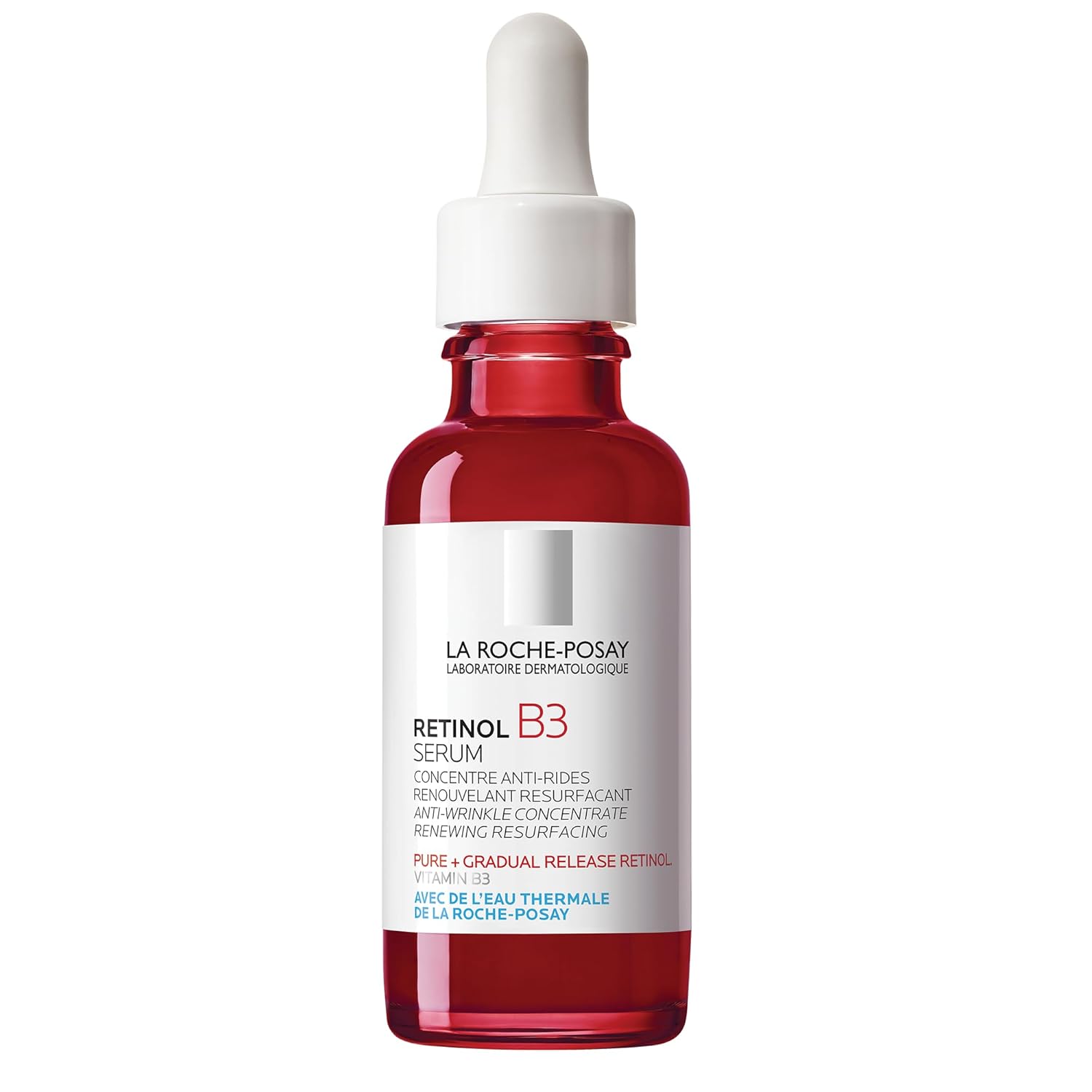
La Roche-Posay Pure Retinol Face Serum with Vitamin B3
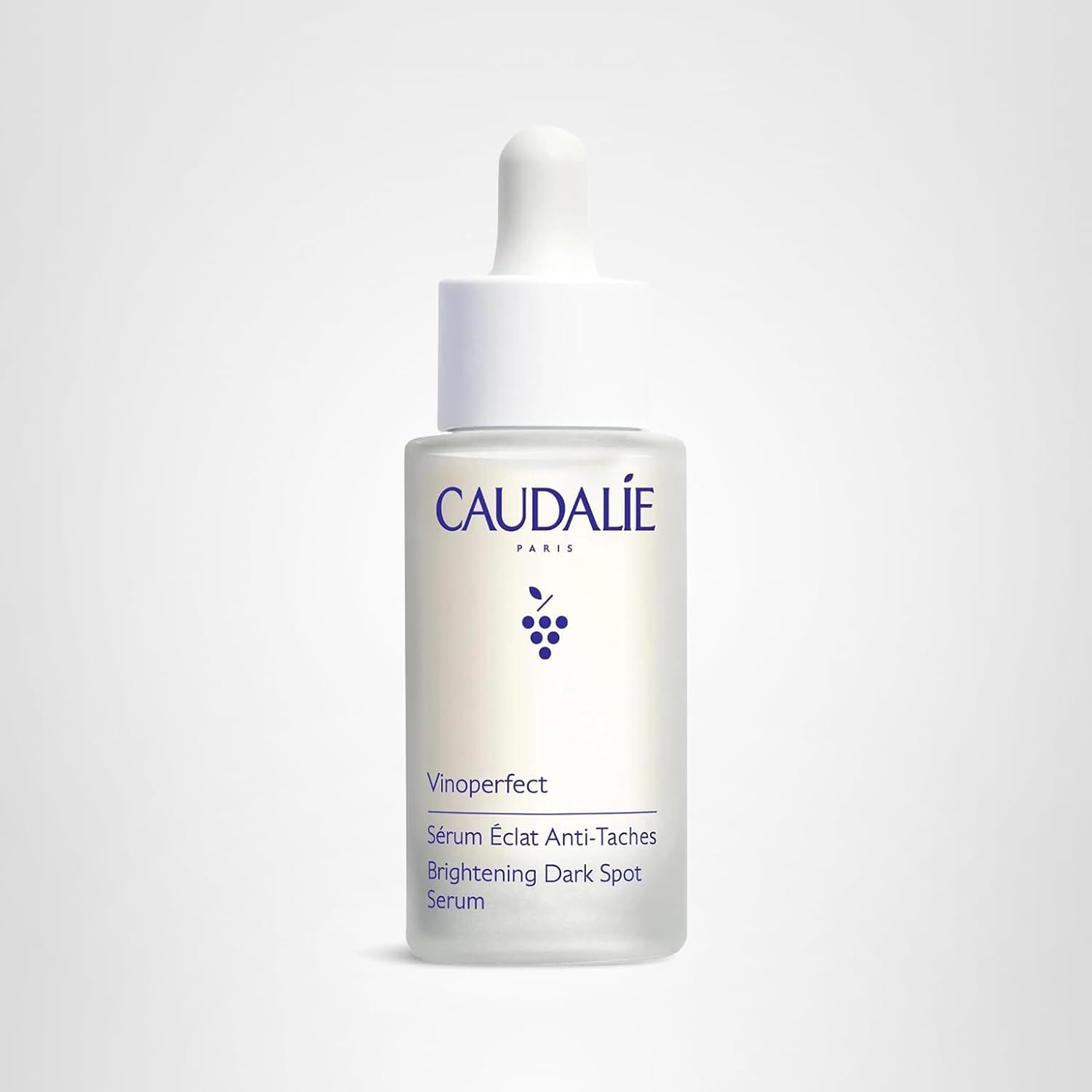
Caudalie Vinoperfect Brightening Dark Spot Serum
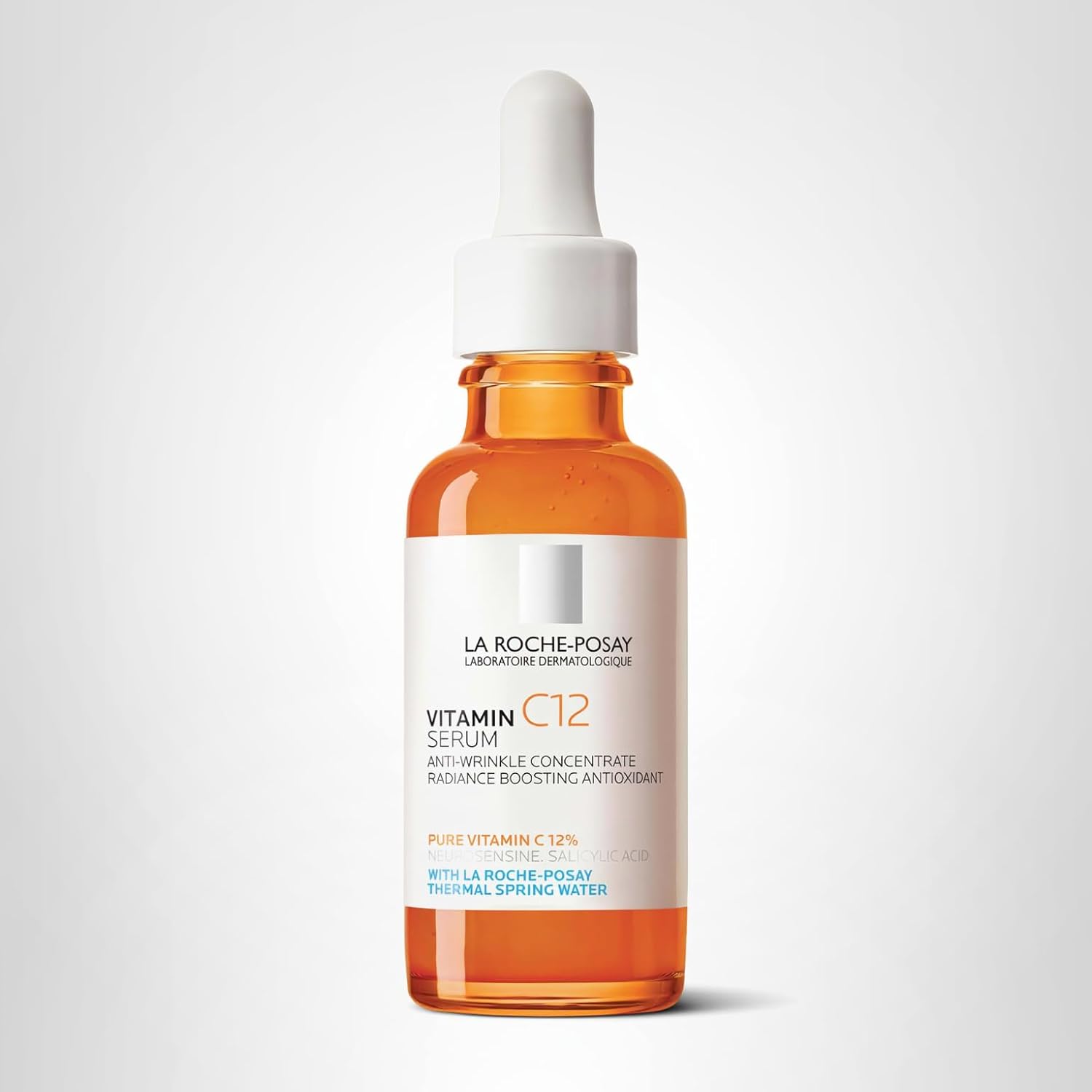
La Roche-Posay Pure Vitamin C Serum for Face
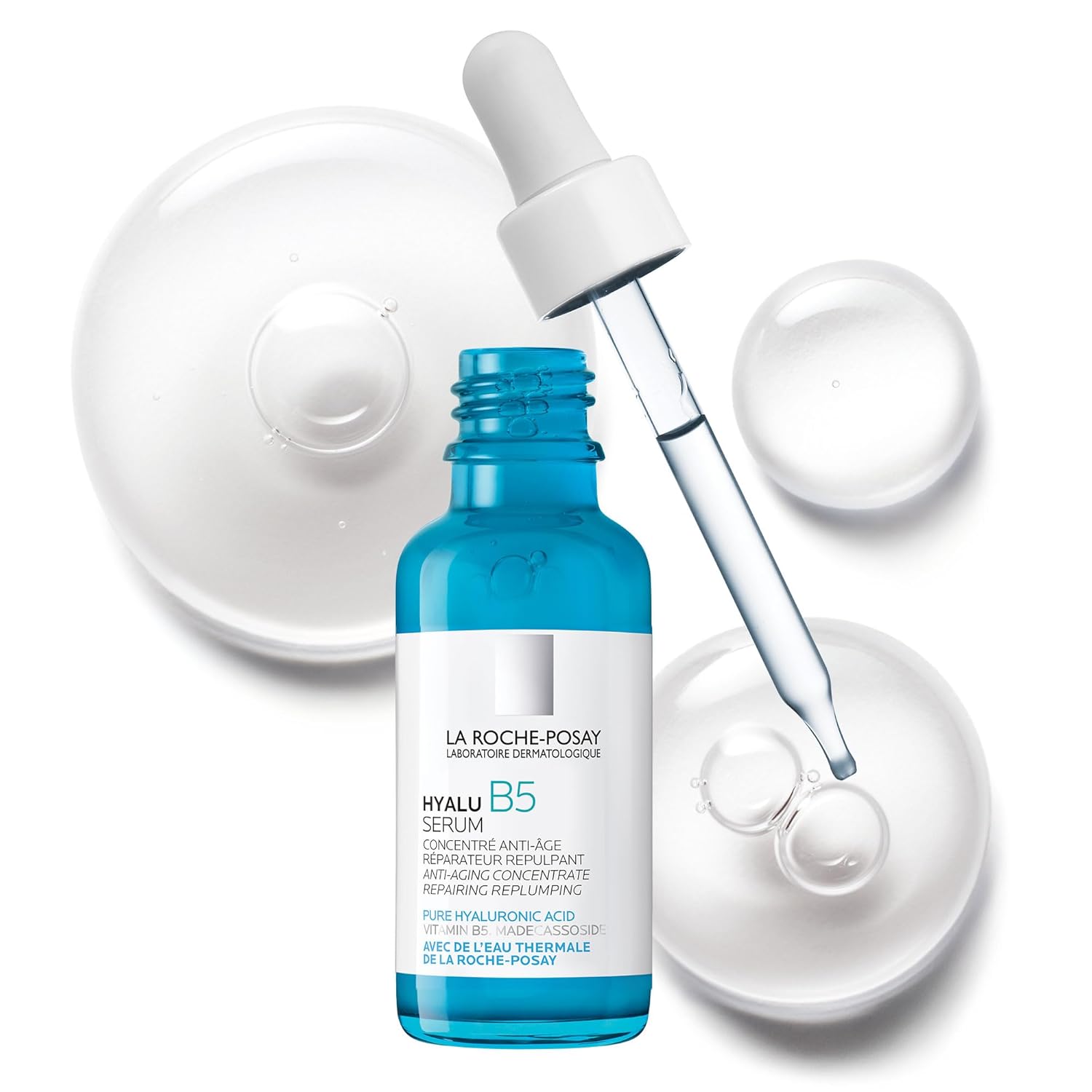
La Roche-Posay Hyalu B5 Pure Hyaluronic Acid Serum
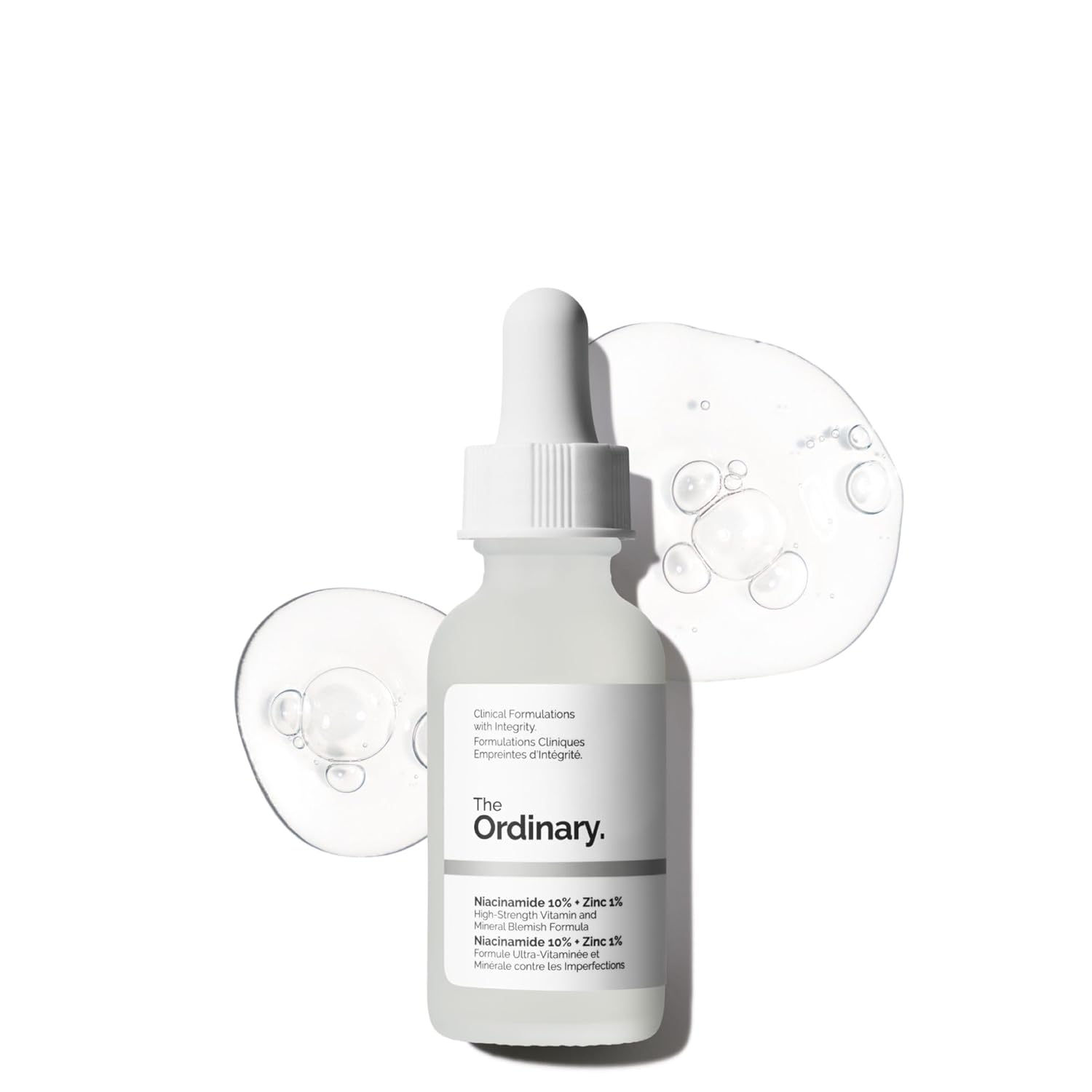
The Ordinary Niacinamide 10% + Zinc 1% Serum
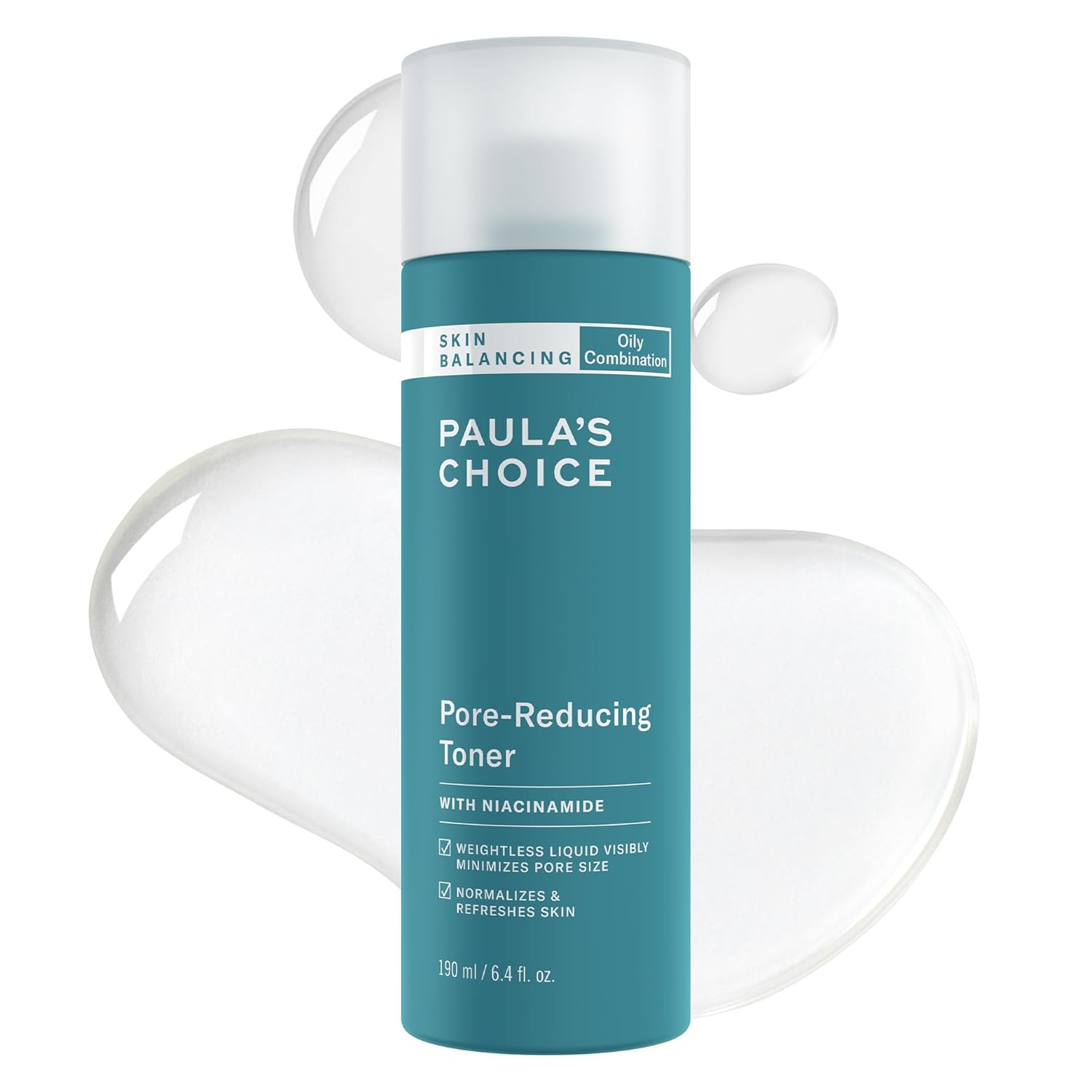
Paula's Choice Skin Balancing Pore-Reducing Toner
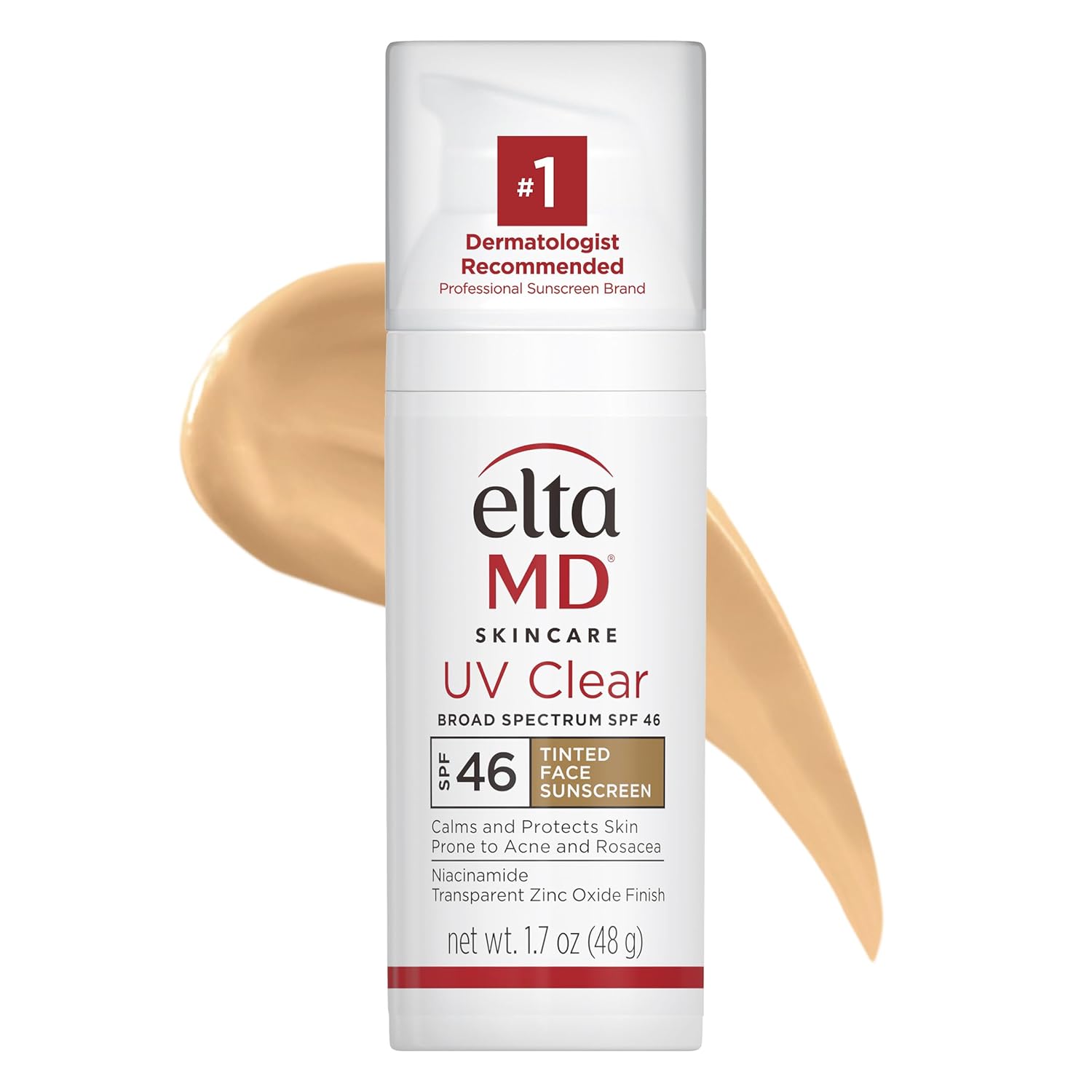
EltaMD UV Clear Tinted Face Sunscreen SPF 46
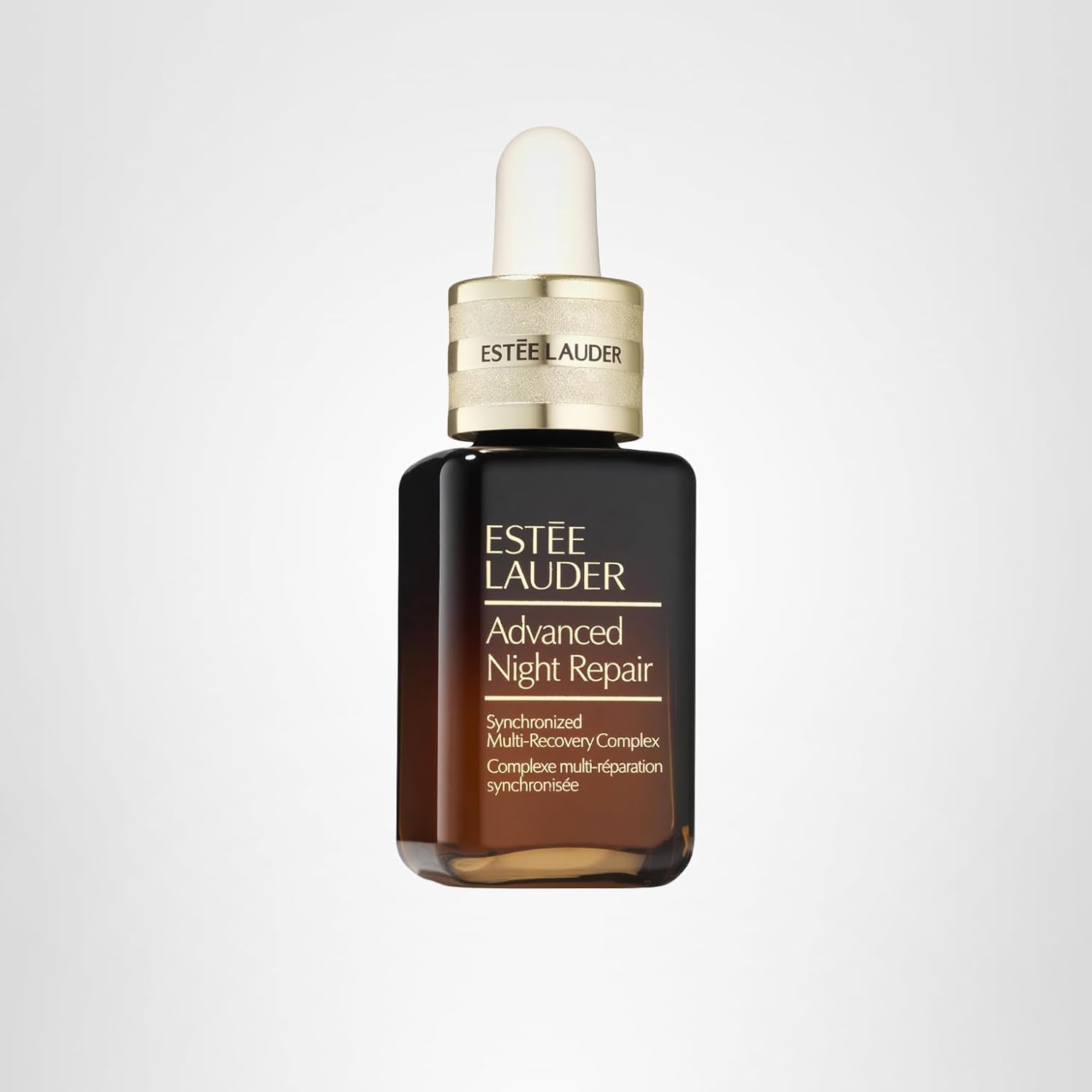
Estée Lauder Advanced Night Repair Face Serum Synchronized Multi‑Recovery Complex